Safety Switch Installation Adelaide for Older Homes
Still on ceramic fuses, or with a safety switch on only one circuit? Safety switch installation in Adelaide closes that gap, and a licensed electrician can usually do it without rewiring the house.
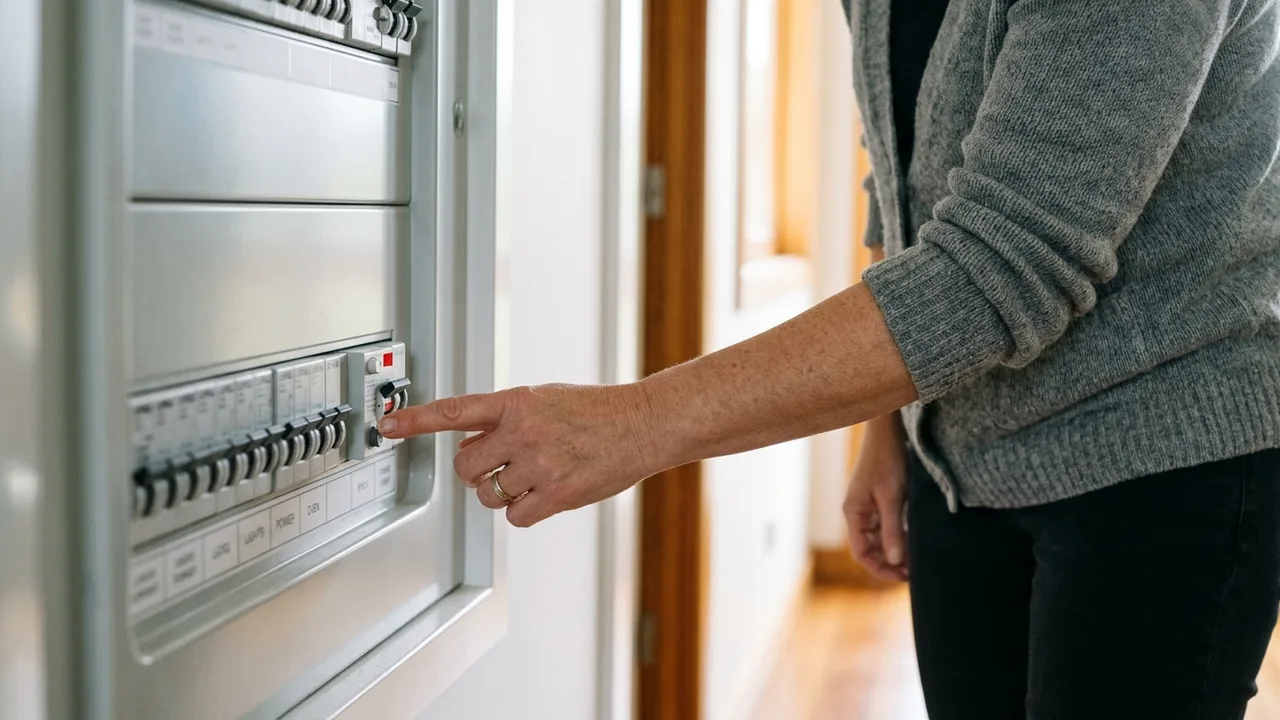
Yes, safety switches can be added to an older home, and a licensed electrician fits them in your switchboard. A safety switch cuts the power the moment current leaks, which lowers the risk of a serious electric shock. If your board still has ceramic fuses, or only some circuits are protected, adding safety switches is one of the most useful changes you can make to the house.
Safety switch installation Adelaide: what it does and which homes need one
A safety switch, also called an RCD (residual current device), watches the electricity going out and coming back along a circuit. If some of it escapes to earth, for example through a person touching a live part, the switch cuts the power very quickly. That speed is what lowers the risk of a serious shock.
The homes that benefit most are the ones with no protection at all. Adelaide stone villas, cottages and character homes in inner suburbs such as Norwood, Unley and North Adelaide were often wired long before safety switches existed, and a fuse board from that era gives no shock protection on its own.
It also suits you if only one or two circuits are covered, or if you are renovating. Kitchens, laundries, bathrooms and outdoor areas are all worth protecting.
How a safety switch differs from a circuit breaker
A circuit breaker protects the wiring. It trips when a circuit is overloaded or shorts out, so cables do not overheat. A safety switch protects people. It reacts to a small leak of current that a breaker would never notice.
That difference matters because a person can receive a dangerous shock at a level of current far too low to trip a breaker. The breaker stays on and the person is still in the circuit. The safety switch sees the leak and cuts the power.
So one does not replace the other. A well set up switchboard has both, and in many modern boards the two are combined in a single unit.
Adding safety switches to an old home
Adding safety switches to an old home is usually possible, and it does not mean rewiring the house. The devices are installed in the switchboard, then connected to the circuits they protect.
What decides the job is the board itself. A roomy, sound board can often take new safety switches alongside the existing breakers. A crowded board, one with ceramic fuses, or one already at capacity may be better replaced, because forcing extra devices into it creates a messy result that is harder to service.
Older boards can also have a backing panel that contains asbestos, so the electrician checks for it when looking at the board and builds safe handling into the quote where it is found.
Old wiring and a safety switch that keeps tripping
A safety switch that trips is doing its job. It has detected current leaking somewhere, and resetting it again and again does not fix the cause.
Usual causes include a failing appliance, a damaged cord, moisture in a power point or outdoor fitting, and tired insulation on old wiring. Sometimes the switch itself has worn out, but the electrician confirms that on site after ruling out the circuit.
A burning smell, buzzing, or hot power points near the board are a different matter. Treat them as urgent. If you see smoke or fire, call 000.
Who can install a safety switch in SA
In South Australia, safety switches on a switchboard must be installed by a licensed electrician. The work happens on the connections inside the board, where the incoming supply stays dangerous even with the circuits switched off, so it is not a job to try yourself or hand to a handyman.
What affects the price of installing safety switches
The cost depends mostly on the state of the board. A board with spare room and modern breakers is a smaller job than a fuse board that needs replacing.
The number of circuits you want protected also counts, as does whether anything unexpected sits behind the board, such as an asbestos panel.
A quote sets the agreed scope, but an old board can still hold surprises once the cover comes off. If you want the circuits in your home protected, you can request a switchboard review.
How it works
-
Look at the board
The electrician inspects your switchboard, notes whether it has ceramic fuses or existing safety switches, and checks how much room is left.
-
Agree the scope and price
You get a clear price before anything is switched off. It covers the safety switches, any board work needed and the circuits they will protect.
-
Fit and test
The power is turned off for the work, the safety switches are installed, and each one is tested before the power comes back on.
-
Compliance paperwork
After the job the electrician provides the compliance paperwork required for the work.
Scope in detail
- Safety switches on lighting and power circuits These are the circuits where cords, appliances and wet hands meet live electricity, so they are where a quick cut-out matters.
- Upgrades from ceramic fuses A fuse board with no safety switches gives no shock protection, so the board often needs more than one device added, or a new board altogether when it is crowded or worn.
- Filling gaps in partial protection Some homes have a safety switch on one circuit and nothing on the rest, which leaves part of the house exposed.
- Fault finding on a switch that trips or will not reset A tripping safety switch is detecting a leak somewhere, and the electrician traces it before the switch is blamed.
Safety switch (RCD) installation options
- New safety switch (RCD) fitting Devices added to a board that has room, with each one tested before the power comes back on.
- Fuse board and mixed board conversion Old ceramic fuses and patchy protection reworked so each group of circuits sits behind a safety switch.
- Tripping or non-resetting switch repair The leak behind a switch that keeps cutting out is traced first, then the fault or the worn device is repaired or replaced.
Frequently Asked Questions
Who can install a safety switch on my switchboard in SA?
What is a safety switch (RCD) and how does it protect me?
What is the difference between a safety switch and a circuit breaker?
Talk to a specialist
Breakers tripping or old ceramic fuses in your meter box? Get your switchboard sorted safely.
Share the details and we will help you take the next step with confidence.