Switchboard Tripping Electrician Adelaide
A circuit that keeps cutting out needs an Adelaide electrician for the tripping switchboard, someone who finds the cause and not just someone to flick it back on.
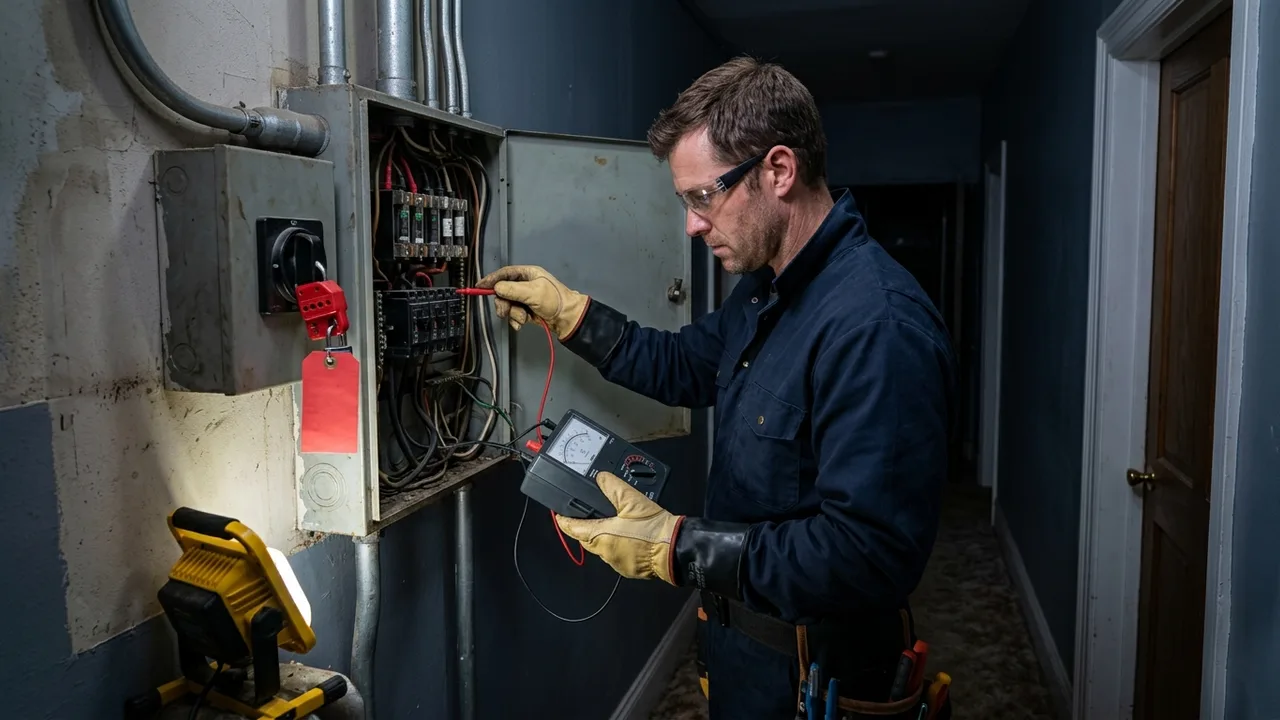
If the same breaker keeps dropping out mid-dinner or overnight, you need an electrician who works out what on that circuit sets it off. The breaker is usually doing its job. An overloaded circuit, a faulty appliance, damaged wiring or a worn device on the board are the usual causes, and the electrician confirms which one on site. From there the fix is either a repair to one circuit or an upgrade of the whole board.
Switchboard tripping electrician Adelaide: why the breaker keeps going off
A breaker trips for one of a few reasons. The circuit may be carrying more load than it was built for, such as a heater, kettle and toaster on the same run. A short circuit, where live and neutral touch, cuts power at once. A leak of current to earth trips the safety switch, and a worn breaker can also give up and trip too easily.
Resetting it again and again hides the cause. If the trip returns, something on that circuit is wrong. Guessing from the kitchen floor rarely finds it, and testing at the board is what narrows it down.
Burning smell, buzzing or sparks near the board
A burning smell, a buzzing board or hot power points mean heat is building at a connection. A loose terminal or a failing breaker can glow long before anything trips, so these signs deserve prompt attention.
If you see smoke or flames, call 000. For a smell or buzzing without smoke, switch off the affected circuit if it is safe to reach and leave the rest to a licensed electrician. Sparks when you plug in an appliance can come from a worn socket or loose wiring behind it, and a one-off flash from a faulty plug is a different job from a socket that sparks every time.
Old wiring and ceramic fuses in Adelaide villas
Stone villas, cottages and character homes across inner Adelaide can carry wiring and fuse boards altered over several decades. Ceramic fuses, rewired by hand, were made for far lighter loads than a modern home puts on them. When one keeps blowing, the circuit is usually overloaded or faulty, and swapping the fuse only resets the problem.
Older boards can also have backing panels that may contain asbestos. A good electrician plans for that before the board is opened, so old fuses and any suspect panel are dealt with properly and not broken up on the day.
How an electrician tests wiring to find the real cause
The work is detective work, done in order. The electrician switches off circuits one at a time, unplugs appliances and brings each circuit back until the trip appears. A single faulty fridge or heater is often the whole story, and then the board itself may need no work at all.
Where the appliances are clear, testing moves to the cable. Insulation resistance testing shows whether current is leaking through worn or damp wiring, and circuit tests show loose joints. This approach treats the cause rather than the symptom, which gives the best chance the same breaker stays on once the fix is done.
Repair the circuit or replace the board?
A repair is enough when one device is at fault, such as a worn breaker, a damaged appliance or a single bad cable. The board stays and the trips stop.
A new board makes sense when the whole board is stretched. Signs include a cluttered layout, ceramic fuses, no safety switches, or several circuits tripping under normal use. It also suits a household adding solar, a battery, an EV charger, ducted heating or induction cooking, since each adds load the old board may not carry. The electrician provides the compliance paperwork for an upgrade, and you keep a copy.
What shapes the price and the time without power
The cost depends on what the testing finds. A single replaced breaker is a small job. Rewiring a damaged circuit or fitting a full board costs more, and a board with asbestos backing needs extra care. You get a clear price before anything is switched off or pulled out, and the quote sets the scope of the agreed work.
Power is off for part of the job rather than guaranteed all day. A fault repair is often shorter than a board change, and the electrician explains the likely outage once the board has been seen.
How it works
-
Hearing what the board does
The electrician listens to which circuit trips, when it happens and whether it follows a particular appliance, weather or time of day.
-
Isolating the circuit
Each circuit is switched off and brought back on one at a time, with appliances unplugged, until the trip can be pinned to one part of the house.
-
Testing the wiring
Insulation resistance testing checks whether current is leaking from the cable, and other circuit tests show loose connections or overloaded runs.
-
Repair or upgrade, with a price first
You hear whether a repair will hold or the board is the problem, and the cost is clear before work begins.
-
Certificate of Compliance
After an upgrade the electrician lodges a Certificate of Compliance, and you receive a copy for your records. Keep it with your house papers, since an insurer or a buyer may ask for it.
Scope in detail
- Circuits that trip again after a reset A breaker that comes back on and cuts out again is reacting to a real problem on that circuit, and a trip that only shows up in damp weather points to moisture in a cable or fitting.
- Blown fuses on an older board Ceramic fuses that keep blowing point to overload or a fault, and the board itself may be past its useful life.
- Safety switches that cut out A safety switch trips when current leaks to earth, which can come from a damaged appliance, damp or worn cable.
- Burning smell, buzzing or hot power points These are signs of heat building up at a connection, so they need attention before the next fault.
- Sparks when plugging in appliances A worn socket or loose wiring behind the plate can throw sparks and needs a licensed electrician.
- A crowded board with no spare room When every circuit is stretched, adding solar, a battery or an EV charger calls for a larger board.
Tripping breakers and blown fuses options
- Fault finding on tripping circuits Working through each circuit to find which appliance, cable or device sets off the trip.
- Blown fuse and breaker repairs Replacing worn breakers or rewirable and ceramic fuse holders once the cause of the overload is found.
- Safety switch testing and fitting Testing that safety switches cut the power when they should, and adding them where the board has none.
- Switchboard upgrade after the fault is found Replacing an overloaded or outdated board with a tidy new one that has room to grow.
Frequently Asked Questions
Does frequent tripping at my Adelaide switchboard mean I need a new board?
Can I touch my switchboard after SA Power Networks disconnects my power?
Who do I contact when I keep losing power at home in Adelaide?
Talk to a specialist
Breakers tripping or old ceramic fuses in your meter box? Get your switchboard sorted safely.
Share the details and we will help you take the next step with confidence.